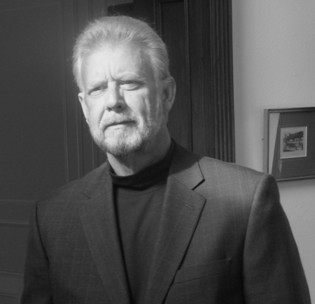
Welcome Reader

It is kind of preposterous, if you think about it, that anyone imagines himself important enough to feel compelled to write down his opinions for others to read. This kind of chattering superciliousness is one of the most infuriating things about academics and so-called intellectuals, generally. But here it goes, anyway.

Book Review of Do No Evil


The following review is from Kirkus, the nation's premier book reviewer:

"An effective integration of ethics, morality and business principles. In a logical progression, Berumen offers a historical review of major thinkers in philosophy and ethics, including John Locke, Immanuel Kant, David Hume, Thomas Hobbes and many others. He develops a framework for universal morality in which moral imperatives--rather than being matters of subjective opinion--immutable. The basis for universal morality, however, must be the avoidance of death and suffering, not just the general pursuit of good--"Being good is not good enough to be moral." The author also dissects current ethical debates, including extensive discussions, of social justice, animal rights and the environment. He explores the free-market economy, acknowledging what he believes to be the superiority of capitalism over socialism--"My theory shows that capitalism is not only ethically permissible, but also that socialism is more difficult to justify on ethical grounds"--and he highlights the principles of individual ownership and property as anchor points in his argument. He balances his argument by noting that the rights to property must be limited, and that morality provides a check on unrestrained capitalist pursuits. In the final section, the author elucidates the many layers of the managerial and corporate environment, deftly analyzing the fiduciary, social and moral relationships between the players in a corporation.

A fresh, convincing ethical examination. "

Selected Links for Reviews/Purchase: 

The Essential Man: Churchill

The text of a speech delivered to the Los Angeles Breakfast Panel in 2003.

We have a tendency to look upon history with a certain sense of inevitability, as though the good guys were preordained to win. The major conflagrations that beset the 20th Century are no exception. That America would emerge the dominant superpower, and that Nazism and, in due course, communism, would both succumb to the dustbin of history, seems to many today to have been a forgone conclusion, a fulfillment of destiny. Eminent historians of the period, including John Keegan, John Lukacs, William Manchester, Martin Gilbert, and many others, all agree, things might have taken a very different trajectory, had several key events not occurred, especially in the case of Nazism.

The worst of the hydra-headed dangers was National Socialism, an unholy alliance of socialism and industrial capitalism, conjoined with a perverted strain of nationalism. The various species of Marxism could at least claim well-intended, though often questionable, utopian ends. The means to these ends were more immoral than the objectives themselves. Communism was in any case doomed to fail as an economic system, and as Ludwig von Mises and Fredrich Hayek predicted long ago, it would eventually collapse from its own weight. Nazism was different, though, for it conjoined evil means and evil ends, with the goal of eradicating entire races and enslaving others, a lust for conquest, and the worship of power, producing a dystopia of sadistic horrors. And here is the critical difference: Nazism did not depend on a particular economic modality for its nefarious efficacy; nationalism was its essential feature. It was compatible with either industrial capitalism or socialism. And remember, this odious regime emerged from the most educated nation on earth, the land that produced Goethe, Kant, and Bach.

Naïve members of the corporate class and their representatives in the government mistakenly saw Bolshevism as the greater threat, for it appeared to be a more direct assault on their way of life. Given the Nazis’ ardent hatred of Marxism, it is not coincidental that many prominent people in both America and Britain saw Nazism as a bulwark against Bolshevism. Only a handful of people in the twenties and thirties were able to discern that Nazism was the more insidious malefaction.

By the middle of 1940, Adolf Hitler stood at a pinnacle of power, exceeding even anything Alexander, Caesar, or Napoleon may have imagined. He had suzerainty over Europe, either outright or through his client states, and a couple of shamefully cooperative, “neutral” states. In due course, he controlled much of the Mediterranean and North Africa. All of this, with the most technologically advanced and powerful military in the world, coupled with an unquenchable appetite for territory, death, and enslavement. The only monument to his rapaciousness consists of 40 million dead in 7 years.

Had the appeasers kept England out of the war, which they came very close to doing, Hitler would have turned his attentions to the Soviets. The Soviets would have been no match for the undistracted, combined forces of the Wehrmacht and Luftwaffe. Once the East had been subdued, with the appeasers at the helm, he would have cowed England into submission. Alternatively, had he not lost the air war over Britain, he would have landed and overwhelmed the British, for as the Normans and Vikings and Romans all learned, landing on the island is not all that difficult once the problems of crossing the channel were surmounted. England would become a client state or worse, having a readymade vassal in the ignominious Sir Oswald Mosley, head of England’s Fascist movement. In either case, Hitler would eventually gain control of the far-flung British seaports and the British Navy, then the most powerful in the world, giving him effective control over the high seas across the globe.

In due course, the world would have been Hitler’s to lord over, if not through direct rule, indirectly, for no one dare stand in his way. Japan, his ally, would have had access to the oil of the Middle East and, by virtue of German control of the high seas, unfettered access to Southeast Asia, China and the Philippines, giving Japan little reason to attack the United States. In the best case, the U.S. would have been boxed in and isolated as a second-rate power; in the worst, in a world dominated by Nazism, with its own budding Nazi movement, it is not inconceivable that the U.S. would become a client state.

In my view, one man made all of the difference in preventing these horrible scenarios: Winston Churchill. Throughout the thirties, in fact, from as early as 1933, he warned his countrymen about Hitler. In this period, he was scorned and mocked by his own party; he was called a warmonger, an anachronism from another age; indeed, it was not uncommon for detractors to question his sanity. He was systematically excluded from holding office under Stanley Baldwin and Neville Chamberlain, relegated to the backbenches of Parliament. He relied on a network of civil servants and military contacts for his information about the Nazi’s military build up and Britain’s shabby military preparedness. With this information he constantly warned Parliament and the British people of the need for action or of the impending doom. Today, we see these speeches as possessing unequalled eloquence and courage; at the time, however, they were considered by most to be the grandiloquent rantings of a washed-up man.

Chamberlain was the head of the Conservative party, which had nearly two-thirds of the seats in Parliament. He represented the prevailing view of his party and, by virtue of its commanding majority, it might be said, even the nation. This view is one of moderation, men seeking reasonable, practical solutions to international problems, and finding common ground through discussion, assuaging the aggrieved through compromise. There was nothing controversial about this doctrine, nor, at the time, about the word that encapsulated it: appeasement. The pejorative meaning came later. It was the sensible doctrine of sensible people, both in Britain and in the U.S., especially by those who thought the financial reparations imposed on Germany after WWI too onerous. Indeed, appeasement was the apotheosis of rational behavior, and the antithesis of belligerence and intransigence, the views with which Churchill was associated.

You know the sad cavalcade of events. With increasing Nazi representation in the Reichstag, Hitler became Chancellor in 1933. He became Fuhrer in 1934 upon the death of President Hindenberg. Reparations having been set-aside in 1932, Hitler began the systematic violation of the remainder of the Versailles Treaty, which he repudiated in 1935. In 1936 he instituted the anti-Jewish laws. In the same year, he faced down 350,000 French soldiers with a relatively small force and reoccupied the Rhineland, showing boldness he would repeat again. With the Anschluss in 1938, he incorporated Austria into the Reich. In the same year, Chamberlain sold out Czechoslovakia at Munich, trading the Sudetenland for the false promise of peace. Hitler, exactly as Churchill predicted, soon claimed the rest. Hitler then signed a pact with Stalin. Both cynically carved up Poland, which Hitler invaded in September 1939, precipitating declarations of war by Britain and France. All Churchill had foreseen came to pass. People were finally beginning to realize he was right all along.

Chamberlain was finally forced by public opinion to admit Churchill into the cabinet as First Lord of the Admiralty, his old post in WWI. Chamberlain’s colleagues even urged this as a means of controlling him, which, of course, was impossible. While Chamberlain still had the majority of Conservatives on his side, there was a growing minority of against him. The smaller Labor and Liberal contingents were already opposed to him, and there were now bipartisan calls for a coalition government. Labor refused to serve under Chamberlain in a national government, but they would serve under their old foe in domestic policy, Churchill. The next in command and Chamberlain’s choice if it had to be someone else, was the Foreign Secretary, Lord Halifax. However, he was a peer in the House of Lords, which he thought disqualified him. On May 9th, Chamberlain, Halifax, and Churchill met. All agreed only Churchill could lead a national government.

On the next day, though, Chamberlain was feeling more confident, and he searched for a way to hold onto power; but that morning, word came that the Blitzkrieg began with invasion of the Netherlands, Luxemburg, and Belgium, thereby cementing his political fate. That evening, May 10, 1940 was arguably the most important day of the war, for, upon Chamberlain’s recommendation, King George VI, who himself preferred Halifax, reluctantly called for Churchill to form a National Government. Not a day too soon. Nothing less than the future of the civilized world was at stake.

General Rundstadt had amassed over 2 million German soldiers on the French border. The flower of the British army, some 220,000 men, was concentrated in Flanders. The British thought the Germans would cross through Belgium as they did in the previous war. Instead, they came across the Ardennes, surging through Sedan and behind the British and French forces, encircling them in a matter of several days and trapping them on three sides, near the town of Dunkirk, their only escape being the sea.

Hitler did not want to squander his tanks and ground troops, so he relied principally upon the Luftwaffe, thinking he could destroy them at Dunkirk. The British committed 25 air squadrons to defend France, leaving only 27 at home. The RAF leaders thought they needed at least 50 squadrons to defend the island. The French wanted even more; but Churchill wisely refused. The fact Hitler did not use his ground troops bought sufficient time for the British to evacuate some 330,000 British and French soldiers and civilians, using an enormous flotilla of civilian and military water craft. Tons of munitions and the army’s best equipment had been destroyed by the enemy or left behind.

Churchill made six, perilous, cross-Channel forays in May to persuade the French leaders to continue the fight; but France had lost its will. General Petain, the aging hero of Verdun, took over from Paul Reynaud and sued for peace. France was then divided into two, one part fully occupied and the other, Vichy, a Nazi vassal state under Petain.

Churchill’s War Cabinet consisted of five people. Chamberlain and Halifax represented the Conservatives, and Clement Atlee and Arthur Greenwood represented Labor. Unlike FDR, Churchill was not a natural politician, but his political skill in those early days was crucial. Chamberlain and Halifax, still representing the majority of Conservative MPs, were both inclined to negotiate a settlement after the fall of France. Halifax considered himself a realist and wanted to entreat with Hitler rather than risking the loss of everything. Twice burned, Chamberlain was more wary, but still inclined to compromise. Churchill understood compromise meant the Nazis would soon have England by the throat, control of its fleet and ports, and hence, all could be lost. He used every ounce of eloquence and cajolery to convince the cabinet to fight. Had Chamberlain resigned from the cabinet, a very real possibility, Churchill would have lost his government. He found himself in the unusual position of having the support of the socialists, Atlee and Greenwood. Atlee became his Deputy Prime Minister in the coalition government and, after the war, his successor as head of Labor. Churchill’s also had greater support from the outer cabinet among both Conservatives and Labor, support he used skillfully to pressure Halifax and Chamberlain on the inside. Once Churchill had convinced the whole cabinet to continue the fight, Britain never looked back.

One of the most difficult decisions Churchill made in this period was to sink the French fleet docked at Oran, rather than let it fall into German hands. He ordered the Royal Navy to sink the ships if the French resisted, which they did. Over 1300 Frenchmen lost their lives fighting their erstwhile ally. He then moved to take over the French ships in English ports across the globe, most of which occurred without incident. He now prepared Britain for invasion with an eloquence not heard since Shakespeare or afterwards. Ahead was the largest air war ever to have been fought.

The United States had long since withdrawn into somnolence. It lost its appetite for foreign involvement after the last war, beginning with the Senate’s rejection of the League of Nations. By the 1930s, the U.S. had its own menacing problems, what with a quarter of the working population unemployed. The isolationist, America First Committee had broad support in the heartland. The majority in Congress was against foreign entanglements. The Neutrality Acts outlawed giving credit to belligerents. Prominent men such as Charles Lindberg were promulgating dark sentiments, finding much to admire in the German Reich. While anti-Semitism never had deep roots in America, it percolated to the surface in populist quarters. Our homegrown Nazi movement, The American Bund, managed to fill Madison Square Garden for a rally. The former rumrunner and defeatist ambassador to St. James, Joseph Kennedy, reported that democracy in Europe and England was over. Fortunately, FDR understood and distrusted Kennedy, paying him little heed, preferring to deal directly with Churchill.

Churchill knew that the war could only be won with the United States in the long run. He was well acquainted with the peculiarities of American politics, and understood there was little appetite in Congress for war. His short-term strategy was to get loans for desperately needed military equipment. In 1939, Roosevelt began communicating directly with Churchill, bypassing Kennedy and Chamberlain. With facts and charm, Churchill persuaded Roosevelt that it was only a matter of time before Europe’s German problem became America’s. Churchill realized, in order to gain America’s support, Britain would have to show it could fight. The sentiment among many in the U.S. was that Britain would not be able to hold on, and would soon come under the German yoke. This made victory in the ensuing Battle of Britain doubly important.

Hitler had already formulated his plans to invade Britain, with the code name of Operation Sea Lion. He knew he had to destroy British air power to overcome the Royal Navy before he could land. He thought victory over the ragtag RAF would be easy. The Battle of Britain began in July 1940, and lasted in earnest until October 1940. While bombings of England continued throughout the war, killing 100,000 civilians, this was the critical period. The Luftwaffe outnumbered the British 4 to 1. In these months, Britain lost 792 Hurricanes and Spitfires, and Germany lost 1389 assorted aircraft, mostly Messerschmidt 109s, which, in most respects, were superior to the British fighters. Hitler lost the air battle and he never again attempted to invade England.

The Germans underestimated the skill and will of the British pilots. After their resounding defeat, the Luftwaffe and its leader, Herman Goering, never recovered Hitler’s affection. Hitler soon turned his attentions to the Soviet Union, making the old anti-communist Churchill and Joseph Stalin into strange bedfellows. The Battle of Britain demonstrated the pluck and capability of the British, and, it served to build American support for providing needed materiel. Lend-Lease was enacted in early 1941, creating the Arsenal of Democracy. Up to that point, Britain paid cash for its supplies, but they were running out of money. With Lend-Lease, they were able to borrow armaments to be returned after the war. FDR said at the time that one does not charge a neighbor to borrow a hose when his house is on fire. One simply expects to get his hose back. Churchill described this as “the most unsordid act in history.” It was the beginning of what Churchill called our “special relationship,” a phrase we use even now.

Now, as I said before, Britain could not have won the war on its own; it could only keep the enemy at bay. Winning required the Soviet and American forces. However, the point I want to drive home is that Britain did not lose the war when all could have been lost, rendering our future involvement moot. Some Americans have the misconception we were there from the beginning. The American presence in the Western theatre was inconsequential until the end of 1942 with Operation Torch, and we did not match British divisional strength in ground forces until late 1944. Of course, while the British had a sturdy presence, we dominated the Eastern theatre soon after Pearl Harbor.

This year, 1940, was the pivotal year, and Winston Churchill was the crucial man. He was not like other politicians. He did not mirror the population. Isaiah Berlin said he “imposed his will and imagination on his countrymen.” In time, they “approached his ideals and began to see themselves as he saw them.” So, then, who was this man, Winston Churchill, the man who I claim made all the difference? He was the elder of two sons born of an American beauty from New York, Jenny Jerome, whose father was a wealthy investor and part owner of the New York Times. His father was Randolph Churchill, the youngest son of the Duke of Marlborough, descended from the original Duke, John Churchill, one of the greatest military commanders in British history, the victor at the Battle of Blenheim in 1704, where he crushed the forces of the Sun King, Louis XIV, and thereby averted French expansion in Europe.

Young Randolph had a very bright political career, rising to Chancellor of the Exchequer at age 37. He, like his son, was known for his oratorical skills. At one point he seemed destined to become Prime Minister, but, in several impetuous missteps with Prime Minister Salisbury, he flamed out early. He was never to recover, politically, for he had contracted syphilis when he was young; and with its advancement, he experienced serious mental and physical setbacks, and died at age 45. Winston was only 20.

Young Winston was neglected and even treated rather cruelly by his father. He never quite measured up to his exacting standards; however, like all boys, he avidly sought his father’s approval. He was constantly told he was a disappointment and reminded of his inadequacies. Winston adored his mother, Jennie, but she was decidedly non-maternal. A socialite with many lovers, she left Winston largely in the care of his beloved nanny, Mrs. Everest, and a series of boarding schools, ending up at Harrow, where he had an undistinguished academic career. He excelled in history and English, but he was incompetent in mathematics, science, French, and the classics.

Churchill’s grades would not qualify him for one of the more prestigious academic universities. After failing his first two exams, on the third attempt, he finally gained entrance to the Royal Military Academy at Sandhurst. It was at Sandhurst that he discovered he had a talent for the military. His marks from Harrow were not good enough to land him in the infantry, which provoked his father’s criticism; he ended up in the less fashionable cavalry. He excelled at horsemanship and fencing, and he turned around his lackluster academic performance, and graduated near the top of his class.

Churchill received his commission as a subaltern in 1895 and was assigned to the 4th Hussars. While waiting for a permanent duty station, he took an eleven-week leave to go to Cuba to report on the Spanish-American conflict for a London newspaper. He was nearly killed under fire on his 21st birthday. He spent some time in New York and struck up a friendship with a former paramour of his mother, Bourke Cockran, a wealthy Tammany Hall politician, congressman, and a former candidate in the Democratic presidential primary. A father-son relationship ensued. Churchill learned a great deal about politics from Cockran, with whom he remained close friends for many years.

Churchill finally received his first military assignment in India in 1896. He was very mindful of his lack of a university education, and thought this a great disadvantage. He had a lot of time on his hands, and on those long, languid days, he undertook a program of self-study in history, literature, and philosophy, with special emphasis on the works of Gibbon and Macualay, whose felicity of expression he much admired. Many years later he could recite from memory long passages from their works.

Churchill’s second combat experience involved quelling a tribal uprising near the border of Afghanistan, in Malakand, not far from Kabul, a battle that involved pistols and swords, where captives were likely to be castrated before being killed. The experience inspired his first book, The Story of the Malakand Field Force. While in India, he began working on his one and only novel, Savrola. It became increasingly apparent he had a talent for writing. He would go on to write a number of books, including several multi-volumed histories, a biography of his father, and another of his great ancestor, Marlborough, which is considered one of the finest military biographies ever written. Churchill once remarked that his dismal performance in school required such intensive remediation, he eventually felt the structure of the English language in his bones.

After India, Churchill ended up in North Africa in Sudan, where he again participated in close combat and Britain’s last, large-scale cavalry charge at Omdurman. He of course wrote a book about it: The River War. He was quite critical of the British treatment of the wounded enemy, the Dervish, thereby alienating him from some senior officers.

Churchill returned to London in 1899 to run for political office. He lost his first campaign for a seat in Parliament in Oldham, a laboring district near Manchester. He made his living selling articles to newspapers and, of course, he continued to crave adventure and, many would have rightly said, publicity and glory. In this sense, he was more similar to the Homeric Greeks and Roman generals than the understated British.

He eventually ended up as a war correspondent in South Africa during the Boer War. A hospital train on which he was traveling came under attack by the Boers and several cars were derailed. Churchill, now a journalist, quickly took command of the situation, persuaded the lightly wounded to fight while disabled cars were moved, so the engine, still on track in the middle of the train, could flee with the remaining cars to safety. The train escaped. Churchill’s personal courage undoubtedly saved many lives. Unfortunately, he was captured by the Boers and became a prisoner of war in Pretoria; but, not for long, for he soon escaped, and made his way by night in the countryside for nearly 300 miles until he reached friendly, Portuguese territory. “Churchill: Wanted Dead or Alive” posters were posted throughout Boer territory. This was enough to make him famous at age 26, not an inconsequential factor in his early political career.

Churchill returned to London with great fanfare. Again he ran for office as a Conservative in Oldham. This time he won, thus beginning his 65-year political career. Oldham was only one of several constituencies he would represent over his long life.

He soon came under the spell of Lloyd George and became disenchanted with the Conservative Party, primarily because of its advocacy of tariffs. In 1904 he joined the Liberal Party, which supported free-trade policies. The Labor party with which we are familiar, which began as a socialist party, got its start in 1900. He held several ministerial positions in the Liberal cabinet. In his career, he would hold all of them but one, Foreign Secretary. Even though he returned to the Tories in 1924, there was a great deal of residual bitterness over his apostasy, arousing animosity and suspicions among Conservatives that would haunt him until the eve of WWII.

In the midst of all this, Churchill fell in love with Clementine Hozier in the summer of 1906. They married in 1908, a marriage that would last for 57 years. Her friends called her Clemmie. His affectionate nickname for her was “cat,” and she called him her “pig.” In old age they continued to sign their letters with little drawings of cats and pigs. Unlike many aristocrats at the time, indeed, unlike a great many powerful men of any time, Churchill never strayed from his “cat.” To her credit, she put up with an extraordinarily difficult and temperamental personality. She is suspected of having one, brief, extramarital fling while on a cruise in the Pacific, but her love and devotion to Winston proved durable and, I might add, was critical to his psychological health.

Churchill became First Lord of the Admiralty in 1911, which, given Britain’s preeminence as a naval power, was the principal civilian defense post in Britain. As First Lord during the Great War, he spearheaded the strategy to engage the Turks at the Dardanelles passage, believing a decisive defeat of the Turks would facilitate advancement through the Pomeranian plain to the German capital. Historians now agree, it was not an unsound strategy, but one that was poorly executed, constantly delayed, lacking coordination between ground and naval forces, and hampered by a recalcitrant military staff. The ensuing tragedy at Gallipoli resulted in the loss of thousands of lives. Churchill took the brunt of the blame, though there was plenty to go around.

He resigned from the Admiralty in 1915 in disgrace. At age 40, his political career seemed to over, and not for the last time. He took leave from Parliament, resumed his military service and ended up on the front lines in France on the Belgian border, where, as a Colonel, he commanded the 6th Royal Scott Fusiliers with distinction. More than once he risked life and limb with fearless expeditions in no-man’s land. In his off hours, he would engage in his newfound pastime, painting, sometimes with shells bursting overhead. It was widely reported in all of his military exploits that he was personally fearless in battle.

In 1916, Churchill returned to politics. He managed to survive an investigation of Dardanelles, and soon rose again to cabinet level, holding several significant defense posts for the duration of the war. After the war, he became known as an anti-Bolshevik crusader, the archenemy of the homegrown socialists, and an advocate of Irish home rule, playing a principal role in negotiations with the Irish leader, Michael Collins. Had Collins not been assassinated, Churchill said he would have made him a member of his club, The Other Club, a dinner and conversation club consisting of people of various political stripes. Off and on he also belonged to the Carlton Club, a Tory bastion founded by the Duke of Wellington in the 19th century. The Carlton Club at this time would have made the California Club seem like a caldron of insurrection. Churchill, as everyone knows, was no teetotaler. He loved nothing better, than drinking, eating, and conversing, particularly when he was the one doing the talking.

He was increasingly at odds with the Liberal party in the twenties, especially when would align itself with the socialist Laborites on various issues, which it did increasingly to hold on to power. In 1924, he crossed the aisle for the last time to rejoin the Tories. The party was then under the leadership of Stanley Baldwin. Churchill became Baldwin’s Chancellor of the Exchequer, a peculiar assignment for a man whose own personal extravagance often surpassed his financial means. By 1930, Churchill had alienated nearly everyone inside and outside of his party; he was now out of office, and Prime Minister Baldwin had become his nemesis, primarily because of Churchill’s obstinacy about granting India dominion status and the government’s refusal to confront an increasingly arrogant and powerful Germany, and its failure to gird its loins militarily.

While Baldwin’s successor, Neville Chamberlain, was responsible for the disgrace of Munich in 1938, it was mostly Baldwin who allowed the military to decline into disrepair. Both men shamelessly conspired to minimize Churchill’s influence, often without his knowledge. Churchill naively believed both were his close friends. The truth is, they both loathed him. Churchill’s only asset during this period was his dogged determination, his eloquence, and a handful of dedicated supporters in government and the press. Of course, we all know what happened next.

A couple of general comments on the remainder of the war are in order, though I am at a decided disadvantage with so many members of our greatest generation present. Britain’s solitary successes were largely defensive, rather than offensive, except for several battles against the Italians and the battle of Al Alamein in 1942, the famous confrontation of Generals Montgomery and Rommel. It is well known that Churchill favored invading Continental Europe from the South, through Italy rather than through Normandy. After the Battle of the Bulge, he wanted the Yanks and Brits to take Berlin first, but Eisenhower, more interested in military tactics than politics, allow the Russians to do this. By the time of Yalta in 1945, Churchill, the senior partner during the initial years, had become the junior member. While it is easy to second-guess the great actors in these days, I have little doubt that had Churchill’s relative influence been greater at the end, not as much would have been given up to Stalin. It was during the Potsdam conference with Truman that Churchill learned the Conservatives lost the election at home, causing him to lose the premiership to Clemet Atlee, his former Deputy.

Churchill remained the leader of his party, and began publishing his memoirs of the war. He was an early supporter of Israel, having declared his support for Zionism as early as 1906; and with some prescience, he expressed his concern about the nascent nation’s treatment of Palestinian Arabs. He again became Prime Minister when the Conservatives won a majority in 1951. He privately preferred Adlai Stevenson to Eisenhower, but either man to Taft, whom he despised. He won the Nobel Prize for literature in 1953 for his writing and oratory on behalf of freedom. During this period, his physical powers steadily declined, forcing him finally to resign from office in 1955 at the age of 80. He then finished his monumental History of the English Speaking Peoples, the bulk of which had been completed before the outbreak of the war.

While an internationalist of the first rank, Churchill grew increasingly dissatisfied with the organization he helped found, the United Nations, especially with its ineptitude handling the Hungarian Revolution in 1956, when Hungarian patriots attempted to shed the communist yoke.

In his last years, Churchill spent a great deal of time in the South of France, his favorite vacation spot, and sailing about the Mediterranean with his new friend, the shipping magnate Aristotle Onassis. The United States Congress declared him a citizen of the United States in 1962. He was the second and last person to be so honored, the other being the Marquis de Lafayette. On more than one occasion, the great champion of freedom, himself born of the aristocracy, declined a dukedom from his sovereign, saying he ought to die “Mr. Winston Churchill, a man of the Commons,” where he had served for so long.

After a severe stroke, on January 24, 1965 Churchill passed away in his 90th year, 70 years to the day after his father died. He was given the last great funeral in the Imperial style. Breaking with custom, and in deference to her country’s greatest citizen, the queen attended a commoner’s funeral. She broke another custom and did not arrive last ; she waited with everyone else at St. Paul’s for the arrival of his funeral cortege. He was buried in a small churchyard in Bladon, near his birthplace at Blenheim Palace. His courageous but troublesome ally, Charles De Gaulle, never given to modesty, summed up us contribution thusly: “In the great drama, he was the greatest of all.” His socialist war partner, Clement Atlee, addressed the House of Lords and said: “My Lords, we have lost the greatest Englishman of our time, I think the greatest citizen of the world in our time.”

Return, now, to those lonely, baleful, desperate days when France had just fallen, on the eve of the Battle of Britain. Here is what Churchill said to his countrymen:

What General Weygand called the Battle of France is over.
I expect the Battle of Britain is about to begin.
Upon this battle depends the survival of Christian civilization.
Upon it depends our own British life, and the long continuity of our institutions and our Empire.
The whole fury and might of the enemy must very soon be turned on us.
Hitler knows that he will have to break us in this Island, or lose the war.
If we can stand up to him, all Europe may be free and the life of the world can move forward into broad, sunlit uplands.
But if we fail, then the whole world, including the United States, including all we have known and cared for, will sink into the abyss of a new Dark Age made more sinister, and perhaps more protracted, by the lights of perverted science.
Let us therefore brace ourselves to our duties, and so bear ourselves that, if the British Empire and its Commonwealth last for a thousand years, men will still say, “This was their finest hour.”

And so it was. No man before or since had so embodied and fulfilled British honor and glory. And that is why Winston Churchill was the essential man.

The Death Penalty

The article below is taken from Berumen's monthly opinion column for the Valley Business News.


The Armchair Philosopher
by Michael Berumen

I have not followed the Scott Peterson trial very carefully. With war, famine, and people dying of genocide in Sudan, tragic as the murder of his wife and child were, the attention given to it was quite overwrought and out of proportion to its importance. Let’s face it, the media made Peterson’s trial, along with the sordid details of his life, into an entertainment spectacle, and much of the viewing public had a morbid curiosity and interest other than jurisprudence. In effect, it was one of several reality shows on television, not unlike the Apprentice or Survivor, only with the potential of an even more devastating outcome. Judging by the cheers and ebullience of those surrounding the courthouse, I gather many were gratified by the result.

Juries are not infallible, they make mistakes; even so, there is not a better system than the one we have. So I shall assume the jury’s assessment of Peterson’s guilt is correct and not second-guess them. Nevertheless, I do not think he should be put to death by the state. It’s not that I think that all human life is equally sacred, as some people do, or that I have some special capacity for forgiveness and compassion. Indeed, I would not find it especially troubling to learn that some bruiser in prison took out the likes of Charles Manson or Sirhan Sirhan. However, I remain bothered by capital punishment.

For one thing, capital punishment is not administered fairly, which is to say, impartially and equally, using the same rules when the relevant facts pertaining to a criminal act share the same, universal properties. The evidence is overwhelming that an African American accused of murder is far more likely to be sent to death row than someone of European ancestry. Moreover, someone who is affluent and able to afford a good lawyer is far less likely to be executed than someone who is poor.

Then there’s the matter of deciding guilt or innocence beyond a reasonable doubt. I think the collective wisdom of a jury is sufficient to send someone to prison, to restrict his liberty for some period of time, even for the rest of his life. However, to my mind, human judgment is insufficient to take a life, that is, other than in self defense, when we have no other rational choice. We make mistakes, and as has now been shown many times by DNA evidence or the confessions of guilt-ridden people who come forward later, the person who is consigned to death row is not always the right one. Scores of innocent people have undoubtedly been executed over the years.

Perhaps most importantly, capital punishment is an awesome, final power to give over to the state, even though it might be sanctified by the consensus of one’s peers. Power over a person’s life is the ultimate power. I am myself generally suspicious of governments, of state power, a suspicion girded by an understanding of history and of the propensity of governments to abuse their power and justify untoward means to obtain desired ends. I trust the government with certain things simply because, from a practical perspective, there is no alternative. But I do not see the benefit to society in the case of capital punishment.

Contrary to conventional wisdom, many studies have shown that capital punishment is not a deterrent to crime. The people who think it has a deterring effect are the people who probably would not contemplate murder in the first place. Statistics tell the tale. For one thing, studies have shown that states with the death penalty have a higher homicide rate than states without one. Texas, for example, executes the most people, and it still has one of the highest murder rates in the nation. Indeed, this is true in the South as a whole, where one might expect there would be greater reverence for life, given its greater predilection for moralizing and religiosity.

Then there is the economic argument. Studies have shown that the combined cost of appeals, death row confinement, and the private costs associated with death penalty cases are more costly than life imprisonment. A 1991 study indicated that the cost of appealing capital murder in Texas at $2,316,655, in contrast to $750,000 for keeping a prisoner in a maximum security cell for 40 years, a significant difference. Once again, the conventional wisdom of cocktail chatter goes down the drain.

Then there is the matter of the coarsening of society with the “eye for an eye” mentality. Steal a pizza, cut off his hand; kill someone, cut off his head. This is the ethos of a medieval culture, one similar to some cultures that we presently are attempting to enlighten with our values. Notwithstanding the fact that some who are sent to their death are contemptible monsters, and that Peterson might well be an example, there is something very brutish about the death penalty, something that seems to me to be unworthy of a civilized people. In the final analysis, I fail to see how society’s ultimate retribution brings the scales of justice into balance or how it benefits the citizenry.

I have heard it said that denouement of a murderer's execution brings a sense of peace, resolution, and justice to the survivors of the victim. It is a sad state of affairs to imagine that our contentment can only be brought about through more violence.

Some will simply say the convicted person deserves it, and that’s the end of it. Maybe so; but to paraphrase someone else, who among us is in a position to make such a final judgment and cast the first stone? If punishment is what we are after, life in a small cell strikes me as quite sufficient.

In Defense of Liberalism

Liberalism is Not A Dirty Word
by Michael E. Berumen 9-15-04

I lament the denigration of the word “liberal” and the fashion of using it as a pejorative, something that can be blamed on self-proclaimed liberals who have misused the term, and certain voluble conservatives preferring invective to reason. Liberal democracy is the dominant political system in the Americas, Western Europe, and a growing percentage of the rest of the world. Liberalism is a full-blooded doctrine of many parts, some in conflict with one another; however, political liberalism has several essential principles without which the theory could not be deemed liberal, insofar as liberty, pluralism, and justice comprise its lexical meaning. In contrast, while conservatism can be a legitimate position at any given time, it is not a doctrine. Instead, it is a relational term, one that can be understood only in terms of another doctrine or practice, that is, the things one wants to conserve. An 18th century conservative had a very different idea about what to conserve than a modern one. Liberals and modern conservatives (in the West) even agree on the core principles constituting the sine qua non of liberalism: individual liberty, government by consent, and the right to property. Extremists on the right and left always do serious damage to one or more of these principles; for example, the far right is especially apt to neglect individual liberty, whereas, the far left denies property rights, failing to see the inextricable relationship between both. Most of us do not subscribe to either extreme, and simply place greater emphasis on one or more of these principles without denying the fundamental importance of all three of them.

For most of history, one’s identity was established upon birth, and an individual’s value was preordained as a function of his place in a hierarchy. The notion that individuals have equal worth, and equal liberty to exercise their wills, is largely a product of strange bedfellows, 15th century theology and the secular philosophy of the Enlightenment. Our modern conceptions of liberty and equality were built upon Martin Luther’s idea that all men are equal before God; John Locke’s notion that all men have property in themselves, with no man having property in another; and Immanuel Kant’s view that every man is an end unto himself, and ought not to be treated as merely a means to another man’s ends.

Then there is the equally modern and liberal idea that governments are morally legitimate only insofar as those who are governed give their consent. In no small part, this is a result of the social contract theory of John Locke, which states that the people contract with their leaders for government, and have the power to throw them out. Locke’s ideas are interwoven throughout the Declaration of Independence and U.S. Constitution, and inform all modern representative democracies. Of course, Locke, Thomas Jefferson, John Stuart Mill, and others have spoken of the natural tension between liberty and democracy, for majorities can also oppress minorities; this tension speaks to the importance of the Bill of Rights and other constitutional amendments that serve to protect individual liberties.

For most of our history, a man’s property consisted of what he could carry or tend to himself, always at the sufferance of his rulers. Modern conceptions of private property developed largely in the 17th and 18th centuries with the end of feudalism and the advent of a commercial middle class. Locke believed that a man’s labor instantiated ownership in property, the so-called “labor theory of value,” and this led to both capitalist and communist economic theories. Karl Marx mistakenly thought value was an objective aspect of price, when it is completely incommensurable and subjective. Price, itself, is the most democratic arbiter of value in a free marketplace.

Today there are two modern and opposing theories of liberalism rooted in the classical liberalism of the Enlightenment, namely, the end-state theory of John Rawls and the historical entitlement and libertarian theory of Robert Nozick. Rawls said the economically advantaged ought to benefit only insofar as the circumstances of the least advantaged are thereby improved. In contrast, Nozick said this is essentially immoral, for if a person acquires his holdings without violating any moral principles, taking his property to satisfy a pre-conceived pattern of distribution is tantamount to theft.

The liberal principles of individual liberty, government by the people, and private property represent the very values we now seek to protect and promote elsewhere in the world. The fact is, there are liberals on the right, on the left, and in the middle: liberal liberals, moderate liberals, and conservative liberals. The term liberal ought to be restored to its rightful place of dignity in the political lexicon, for it represents the noblest ideals of the Enlightenment. Politicians and shout radio and TV hosts who have come to use it as a word of derision clearly misunderstand its essential meaning. However, absent such a restoration, by any other appellation, these liberal principles , which required generations of effort and sacrifice to realize in our own lives, are sacred and certainly worth conserving and defending.

Why Fire President Bush?

By Michael E. Berumen 10-04

A Brief Rationale on Why George W. Bush Should be Fired on November 2, 2004.........

(Alas, it was not to be. Let us therefore hope for the best, lest I be forced to utter that obnoxious refrain: "I told you so!")

I. The Economy

George Bush has completely mismanaged his trust when it comes to the economy and federal expenditures. It is true, there is only so much a president can do to affect the economy; however, what he has done has been mostly negative. He has completely squandered the record surplus he inherited, and he has managed to put the nation in a serious deficit, adding billions to our national debt. Over half of the current deficit is attributable to expenditures that are not related to defense. He accuses others of being "tax and spend" politicians, when he is the very soul of a "spend and borrow" politician, something even worse. His extensive borrowing, with interest, will cause future taxpayers to have to pay even more; he is simply deferring the inevitable for the gratification of a few, today, and thereby, mortgaging our future.

The deficit has put an enormous drag on the economy, for it affects the confidence of investors both at home and abroad, and it competes with borrowers for financing in the marketplace. Former Treasury Secretary Paul O'Neill reports that the president is woefully ignorant on economic issues (he also said that even before 9-11, President Bush was obsessing about Iraq), and that he showed no interest in learning about them in the many, high-level policy meetings he attended.

The economy needed a stimulus to promote reducing high inventories through purchasing, or what economists call a demand stimulus. Productivity was not the problem; we remained highly productive. The problem was too much supply. The president's tax program gave too much to wealthy investors who did not spend their money, standing on the sidelines waiting for a recovery, thereby not helping the economy on the demand side, providing the wealthy an unnecessary windfall that simply exacerbated the deficit, in effect, helping those who required the least amount of help.

There are many examples of President Bush's mismanagement of the economy. The president promoted a highly questionable Medicare drug proposal, the projected cost of which his administration intentionally understated by billions of dollars, his minions having instructed the fund's actuary to remain silent about the true cost; consequently, the Senate passed the proposal based on bogus information. The president has not vetoed one major spending measure in over three years. To illustrate how unprincipled on economic matters this president is, this alleged free-enterprise Republican imposed steel tariffs on foreign imports in order to curry favor with the steel industry during the mid-term elections; this hardly represents what an honest proponent of free trade would do. More jobs have been lost under President Bush's watch than in any other administration since Herbert Hoover's. And, not least of all, his having made us a veritable pariah among other nations has adversely affected our nation's negotiating power in international trade, including getting others to adhere to their agreements with us, an area where presidents have especially been able to exercise some economic clout.

II. 9-11-01

It is a complete mystery to me how it is that many have come to see President Bush as an effective anti-terrorist president and that he has escaped sharing in the responsibility for our lack of preparedness for 9-11. One observer recently said this misconception might be the result of our natural tendency to want to believe the president is doing what is necessary to protect us, much as children assume this is the case with their parents, whom they instinctively trust.

President Clinton and his staff warned the incoming president that al Qaeda was his number one priority, for the true scope of the terrorist threat had become abundantly clear by the end of Clinton's second term. President Bush's own intelligence staff and his chief of anti-terrorism told him and his key staff members that al Qaeda was very likely to make a move against us on the United States' soil in the near term. The president and key members of his staff paid virtually no attention this, and focused instead on an anti-ballistic missile system, a pet project of cold warriors that was more suitable for another era. Indeed, Vice President Cheney, head of the anti-terrorism task force, did not convene a meeting from May, 2001 until 9-11 itself. Had the president and the vice president exhibited an appropriately heightened interest in the al Qaeda threat, one that had been repeatedly and clearly identified to them, it is not inconceivable that the 9-11 plot could have been completely or even partially foiled; after all, a visible interest at the highest levels would have certainly caused the various intelligence and police agencies to have assumed a much more vigilant posture. The fact is that the president failed both to understand the threat and to react aggressively to it. He utterly failed in his responsibility to protect the nation, and, therefore, he should be held accountable for this.

III. Osama bin Laden

President Bush and his closest advisers completely mishandled the attempted capture of Osama bin Laden (OBL) when he was trapped in the mountains of Afghanistan. Rather than risk the political fallout of sending in American ground forces, forces that were well equipped to interdict OBL before he could escape, the administration relied upon a ragtag Afghan militia led by warlords.

President Bush has used Iraq and Saddam Hussein to distract the American public from his failure to capture our greatest enemies, OBL and other key leaders of al Qaeda. It is remarkable that the president who ignored his predecessor's warning that OBL was his greatest international threat; who wiled precious hours away in confusion and inaction immediately after the 9-11 tragedy occurred; and who has still not caught OBL several years later has somehow convinced people that he is a capable and serious anti-terrorism leader. This speaks to the incredible power of the Bush marketing apparatus, making full use of all of the symbols of our military might and the iconic imagery of the presidency to create a public perception that is belied by reality. Had only similar talent and energy as this marketing required been put into subduing the man responsible for taking so many lives on American soil.

IV. Afghanistan

President Bush's diversion of military and financial resources to Iraq; his mismanagement of our nation's budget, thereby reducing the available resources; and his failed policies on the ground in post-war Afghanistan have left that poor country in a complete mess, with substantial parts of it now being managed by warlords and a resurgent Taliban. Our military.....one built primarily during preceding administrations.....performed brilliantly. The efforts of our courageous and dedicated soldiers should not be diminished by virtue of the poor leadership of the Commander-in-Chief.

Afghanistan had a chance to become a model democratic state, had we stayed the course and not diverted our attentions and resources to fulfill President Bush's vendetta war. We abandoned it along with our focus on capturing OBL. Let us hope that this nation can overcome its profound difficulties. With any luck, a new administration will be able to give it the assistance it deserves.

V. Iraq

Saddam Hussein was a bad guy and it's good to be rid of him. However, doing what we did, when we did it, and, most importantly, how we did it, were mistakes. It is simply not enough that he was a bad guy, for there are lots of them around the world. The president ruined our international standing with his preemptive war and his arrogance; it could take years to repair the damage he has done. Even those who supported us did so without the majority of their citizenry behind them, and, more than likely, because they were reluctant to defy us. And their support has been weak, all along, and primarily symbolic, with very few troops committed to combat roles and very little financial support. Whereas other countries bore the financial burden (about 90%) of the first Gulf War, we took on nearly the entire burden of the current war and the reconstruction, something our economy could ill afford, and all as a result of the president's utter arrogance and lack of finesse in dealing with the world community (and I do not mean just the insufferable French).

Now, the worst thing is that our planning for the aftermath of ousting Saddam and the occupation of Iraq was completely inadequate. The results speak for themselves. Over one thousand American lives have been lost and thousands more have been wounded....most of which occurred after the president's stupid declaration that "Major combat operations are over" and his "Mission Accomplished" display of bravado. What is more, and we don't hear as much about this, over ten thousand Iraqis have lost their lives. Thousands more have been wounded, lost their homes and businesses, and their lives have been left in shambles. Yes, Saddam is gone....and no one laments that fact....but did the Iraqi and American people need to pay such a high price? Certainly we could have managed things better than we did after the invasion. For example, disbanding both the Iraqi Army and civilian governmental infrastructure were catastrophic errors, actions based on the advice of the neocon crony and Iraqi expatriate, Ahmed Chalabi, a man of very dubious character and of virtually no influence among Iraqis. Clearly, we could have waited until we had made more progress in Afghanistan and in capturing bin Laden, not to mention completing the WMD inspections in Iraq, and gathering sufficient international support for further action. The president and his staff blatantly took advantage of the heightened emotions surrounding 9-11 and implied at every step along the way that there was a connection between Iraq and international terrorism, including al Qaeda, despite the fact there was no evidence for this.

Yes, we all believed there could have been weapons of mass destruction. After all, we depend on our president to tell us the facts on such matters. But notwithstanding this belief, no respected military analyst ever maintained that Saddam posed an immediate threat to the United States...this, pure and simple, was concocted by the politicians in the Bush Administration, especially Vice President Cheney and the neo-conservative echo chamber. I cannot say that I would never give countenance to striking another country preemptively, especially if it posed a grave and imminent threat; but it is clear that Iraq was not the best candidate for such an action, and that inspections and international diplomacy could have gone on for a longer time.

The president has capably shifted the blame for his malfeasance to the FBI and CIA, upon whose information he says he relied. This should not surprise us, for the president has a long track record of not accepting responsibility for his actions, one that dates back to his youth. Had he listened to the professionals (as opposed to the political appointees) in the CIA, FBI, Department of Defense, and State Department, he might have come to a different conclusion, waited until we had exhausted all alternatives, completed the job in Afghanistan, and developed a workable plan for occupation. The bottom line is that President Bush is responsible for the decisions he makes and, ultimately, for what occurs in government on his watch, including intelligence and planning failures.

VI. Civil Liberties

From a domestic standpoint, the most important reason to fire President Bush is not the economy. It will right itself in due course, with or without him. One thing that is even more vital to our nation's well being, that which separates us from all other nations today and in history, and the reason that we are the beacon of hope for so many around the world, is our liberty. President Bush, who likes to say our enemies "hate us for our freedom," has himself shown that he has very little regard for human rights: holding people for months without charging them; not providing them with legal counsel; not even disclosing who is held; flouting not only the principles we hold dear and purport to defend, those enumerated in the Bill of Rights, but also those codified in international convention. And then, of course, there are the various abuses of prisoners....physical torture, humiliation, inhumane living conditions, even forcing old men to live in their own excrement, all of a piece of the utter contempt for civil liberties that began in the Oval Office and worked its way down through the ranks, even to the point of disgusting career military commanders. Of course, President Bush and his staff would like to blame this on privates and corporals. And this is the man who is likely to appoint the next two Supreme Court justices. This simply cannot be allowed to happen.

VII. Miscellaneous

In addition to all of this, President Bush has the worst record on environmental issues in modern history; he has abandoned decades of progress and ignored scientific evidence. He has stood by while the medical insurance crisis grows, allowing more Americans to join the ranks of the uninsured every day. He has permitted Medicare premium rates to soar, increasing the already difficult burdens of the elderly. After promising not to do so in his campaign, he has dipped into Social Security funds to hide his gross fiscal irresponsibility (and his supporters say he is consistent!). A shameless pawn of the gun lobby, he has not renewed the assault weapons ban, thereby jeopardizing the lives of innocent citizens and members of law enforcement for the gun industry. And, as he has shown time after time, he is simply unwilling to learn or to admit error, elevating consistency to a moral principle, even when the facts clearly warrant a change in direction. Consistency is not in and of itself a virtue, however, and especially when one is consistently mistaken.

VIII. Character

Much has been made of the President's character. His self-proclaimed piety and his dedication to moral principle are simply not supported by the empirical evidence. A set jaw and powerful, belligerent words behind a podium do not exemplify one's character: one's actions do. One can forgive him for his youthful indiscretions...including being AWOL when others served, substance abuse, driving while under the influence, business failures, and so forth...but what about examining his more recent actions? How about the way Senator McCain was smeared by the Bush campaign with such calumny and innuendo in the 2000 primaries, even questioning the senator's heroism during Vietnam (sound familiar?), and suggesting that his children were illegitimate, appealing to the basest sentiments of some because his kids are of a different race? What about lying, for example, by taking credit for health care reform in Texas during the presidential debates, when, in fact, as governor, President Bush was an ardent opponent of the reform? Who could forget his admonishment of past administrations for not being sufficiently "humble" in our international relations, something that must amuse other world leaders. Then there are his many declarations of being against "nation building," no doubt, something that would surprise the good people of Iraq, those who have had to suffer under his own inept version of it. And what about the contempt he shows our brave veterans, sending them off to war, utilizing his position as Commander-in-Chief to curry favor with them with pomp and circumstance, and then leaving them high and dry when it comes to providing veterans' health benefits, which he has systematically reduced?

One of the most galling traits of this president is his penchant for showing his contempt for those allies who disagree with him, whilst, at the same time, he shows no shame at all when he hobnobs with the brutal, medieval royals of Saudi Arabia. He is willing to show a good time to these benefactors of fundamentalist madrasahs around the world, the cauldrons of hate that taught many young Muslims to despise America. He is willing to fete the people who practice all manner of cruelty and oppression against their own citizens, who are enemies of our most basic principles of liberty and democracy. His hypocrisy is shameful.

IX. Conclusion

Past is not necessarily prologue in predicting how a president will fare once he is in office. The experience of other presidents, even great ones, could not have been foretold by their lives before they took office. Abraham Lincoln, for example, was an undistinguished trail lawyer, a one-term congressman of lackluster accomplishment, and a failed senatorial candidate. FDR was an effete aristocrat, even something of a dissembler and a cad. Theodore Roosevelt was an egotistical seeker of glory, a medal hunter, just as young Winston Churchill was across the Atlantic. But each of these men rose to greatness once they were office and events tried them. The fact that a president had an unremarkable past, or even a questionable one, does not mean he cannot rise to greatness.

However, once a president has been in office for over three years, we no longer need to rely on his record in other positions to imagine what kind of president he would be. We know. We have had sufficient time to see what he is made of. We need not speculate about how President Bush will perform: he has already failed. He has mismanaged the economy; we have not caught or killed our number one enemy; we are not appreciably safer than we were before 9-11; we went to war with someone who did not attack us based on false information and misrepresentation, for we were misled into believing we were fighting international terrorism in Iraq; we have incurred the wrath of the entire Muslim world because of our ham-handed methods, and we have provided new incentives for terrorism among the disaffected; our defense forces are overextended and overtaxed; we have failed thus far in both our occupations of Afghanistan and Iraq; our international relations, even with our traditional friends, are in complete disarray; and, not least of all, our most sacred civil liberties are in jeopardy.

Unless the leading alternative can be shown to be even more flawed in his character and judgment, George Bush should be sent packing. It is true that we always take a chance whenever we elect a new president. But the facts are clear, our nation has already suffered enough as a result of the last election, an election that did not reflect the will of the majority, and, at the very least, that was of very dubious legitimacy. It is certainly a chance worth taking.

On God

On God

By Michael E. Berumen 3-4-96

I think it unlikely that there is a god, if by that we mean an intelligent, directed force or personality with extraordinary, supernatural powers, a being that is able to create something from nothing, the prime mover of the cosmos. This, of course, would include the various depictions of the god or gods of the religions now extant, as well as those that have passed into history. It would also include the less anthropomorphic, and more sophisticated, metaphysical being, the ineffable force of intelligent design suggested by some philosophers and theologians. Why? Because there is no evidence for such a being, and logic does not require us to believe that there is one.

All of the classical arguments are flawed. The ontological argument, which has appealed to many philosophers, essentially states that the perfect being that we can imagine must include
the property of existence; they therefore conclude, the perfect conception must exist. This is simply circular, however, and it assumes that the predicate "perfection," which is implied by a definition, is true, which is to conflate logical validity, semantics, and reality in nature, leading us to suppose the predicate corresponds to a fact simply because we imagine it is necessitated by our words. Immanuel Kant, among others, exposed this fallacy.

The venerable and more ancient cosmological argument says there is something, and something does not come from nothing, therefore, a first and persisting cause, and an unmoved mover, must be non-contingent. The notion that cause and effect are inextricably linked was handily shattered by David Hume, so we need not go there. Moreover, there is no reason to assume there even was a first cause, a beginning, and every reason to assume that the universe simply is, without beginning or end. Indeed, if we can conceive of a non-contingent being, a first cause without an antecedent, we can just as easily conceive of a non-contingent, enduring universe.

The teleological argument, the argument from design, suggests that where there is a design, there must be a designer. In other words, if we find a watch, we can infer a watchmaker. This is the favorite argument of creationists and the like. The assumption, here, is that there is a design, as opposed to unplanned order in the physical universe. But we are inferring entities without evidence, assuming the arrangement of the universe and the objects we ourselves manufacture are analogous, which is a rather large assumption to make. We are creating explanations out of whole cloth. Ockham is surely rolling in his grave. Order does not imply a creator or even an architect. Order is simply a pattern; it need not result from intentional arrangement, as with flowers in a vase. What is more, the fact is that the overall direction of the universe is not towards order, but disorder, in accordance with the second law of thermodynamics. The order that we imagine is a transitory state, a snapshot of a universe heading towards increasing entropy, which, physics tells us, never decreases. Disorder, chaos, would hardly seem to be the best "design" one might expect from omnipotence.

Since logic and science provide no help, some have said that we need god in order to have an "objective" moral reference or standard, without which, we are consigned to moral relativism and an "anything goes" ethos. This is no better than the other arguments. Universal morality does not depend on our belief in god, but on impartial and rational judgments. Indeed, various renderings of god's judgments have resulted in all manner of immorality throughout the ages. And, as Plato once said, what is moral is not moral because god said it, but because it is moral and god recognizes it as being such. Morality is quite independent of a belief in god. Indeed, morality is not even primarily about what one believes, it is about what one does, and in particular, what one does in relation to others. I have shown elsewhere at great length that the objective properties of morality result from judgments being subject to logical rules and its evaluative aspect.

Another kind of argument is that we would be prudent to hedge our bet and believe in and worship god simply because we might be wrong and, as a result, could suffer eternal damnation. I find this view to be especially curious. It seems to suggest that omnipotence is unable to detect our insincere motives. My own view is that if god is good and does not intentionally promote suffering, the decent folk among us need not worry. If he is not or if he is indifferent, there is nothing we can do about it, anyway.

I myself doubt that omnipotence would be dependent upon our worship or approval, or that he could be as vain or petty as the god often depicted by the major religions that emerged from the Middle East. Moreover, it seems to me that making us depend upon faith rather than veridical evidence serves nothing but a mischievous and somewhat devious kind of purpose, a most unlikely motivation for a perfect being. And it simply defies reason, not to mention compassion, to suppose that an omnipotent and omniscient god would allow the horrors of the universe, the death, suffering, and destruction both nature and man produce. Perhaps a lesser god or a god that is not good would engage in such acts. And then we must ask, is such a god worthy of our worship? I think not.

There are those who will say we should not presume to know the mind of god, and that it is simply preposterous to suppose his benevolence is subject to our own standards or that his purposes can be remotely understood by us. This is yet another strange sort of argument, for it says we should not seek to know the mind of god while, at the same time, it presupposes certain aspects about god. To say that we cannot understand something and then to proceed to describe the something we cannot understand is specious on the face of it.

Of course, the concept of omnipotence also poses great logical problems, that is, if we really mean to posit an all-powerful being. Such a being ought to be able to defy the laws of reason, the most fundamental logical axioms. But of course, this is inconceivable. A=A is true, here, now, yesterday, tomorrow and everywhere, and A & -A is false, here, now, yesterday, tomorrow and everywhere. I will further posit that it is equally true that 2+2=4 and lim ƒn x = ƒ means lim ƒn ═ ƒx for every X E x or lim ƒn = ƒ, notwithstanding god's desires for any of these propositions to be otherwise, whether in this or in any other reality.

That omnipotence in the most complete sense of the word, which is to say, all powerful, is able to will anything is simply an illogical construct. God could not will anything true. This is simply indisputable, though I realize many desire and believe otherwise. One must therefore settle for near omnipotence, very powerful, a god of middling power, or whatever, not unbound power.......(I myself think all of these alternatives are about as likely as the universe existing in a soap bubble). Believers can take comfort in the fact that god, no doubt, would not want to be viewed as illogical, anyway!

If it were not the case the omnipotence is shackled by the rules of logic and reason, then we would have to admit to a great many antinomies:

She could make something she could not lift.
She could make a round-square cupola.
She could make all bachelors married (while still bachelors).
She could make herself into having never been.
Etc.

Religion, of course, is a different, though related matter, for it depends on a belief in a superior power, and on others believing that its hierarchy possesses some special insight into the mind of providence. As far as I am concerned, however, religion is little more than organized superstition. To be sure, it has inspired good music, art, and charity, and it has offered comfort and hope to millions. On the other hand, it has stood in the way of knowledge and progress, sanctified all kinds of suffering, intolerance, and oppression, and it has been the source of countless wars and conflict. I believe we would be better off without it.

I think the root of religion, mysticism, and the belief in god and the supernatural, generally, springs from three very human traits. First, there is the fear of the unknown, and perhaps most particularly, our fear of death. Religion gives us hope that something good lies ahead, notwithstanding our lack of understanding, which comforts us, most particularly if we are living under hardship.

Second, there is our desire to understand why things are the way they are, our need to have an explanation. No doubt our early hominid ancestors, bereft of scientific knowledge, began to ascribe natural phenomena such as the seasons and lightning to supernatural causes. This continues to this day, though often at a more sophisticated level. When early man dreamt, and then sought an explanation for it, perhaps the idea of a soul and of immateriality began to take shape, which, in turn, gave support to belief in an afterlife. Also, our penchant for explaining things is related to our need to ascribe a purpose to everything, not least of all, our own lives. Many feel that there must be some reason for our existence beyond random occurrences, a biological imperative and natural selection.

Third, there is our awe and wonder at the mystery and grandeur of the universe; our feelings of connectedness to it; and our own sense of transcendence and spirituality that contribute to our predisposition for religious belief. These feelings have all led to wonderful creativity in art, literature, and music, among other things.

Scientists have even suggested that our propensity for having religious feelings is hardwired in our brains, and that some people are particularly prone to them. It might even serve to explain why people who do not believe in the supernatural, as such, nevertheless share in a sense of awe, for example, in the seemingly transcendent beauty of mathematics and science. Indeed, it might explain why great minds who could not succumb to the superstitions of the masses looked for god in more rarefied places, as in Plato's timeless world of perfect forms. It is perhaps no coincidence that mathematicians and philosophers were especially enamored of the "logic" and seeming purity of the ontological arguments.

Of course, nothing of what I have said has shown that there is not a god or a supernatural realm. I have only shown that the arguments in favor of them are not especially compelling, and that there are even explanations for why we believe as we do, notwithstanding the lack of evidence. No doubt some might conclude from the foregoing that I am an atheist or agnostic. In fact, I am not. Atheism implies that we know there is not a deity, whereas I believe it is unlikely, not impossible. Indeed, I think atheism as it has been promoted by some, most notably, communists of the Marxist sort, has many of the same attributes as a religion, a belief in a supreme power (dialectical materialism), a sacred text (Kapital), and even messianic leaders (Marx, Lenin, Mao, etc.), not to mention a belief in paradise, the communist utopia.

Agnosticism, properly understood, suggests that we cannot know, and that we are doomed to uncertainty. I think this view also claims too much. It is not difficult at all to imagine how the deity might make himself known to independent observers and how he could become subject to evidentiary scrutiny. Many who call themselves agnostics really mean to suggest that they do not know of god's existence, which is different than saying it cannot be known. This strikes me the correct view. In any event, there are better ways to spend one's time than worrying about it. Pursuing knowledge and happiness while, at the same time, not harming others and, when we can, promoting their happiness, strike me as much more deserving of our attention. I should think a benevolent deity might agree.

Good Old Days?

Reprint from June, 2004 issue of The Valley Business Journal

Those Good Old Days Were Not So Good
by Michael Berumen

An acquaintance recently told me that he thought society was more morally depraved than it ever was. He went on to say that he misses the old-time values and the tranquility of those halcyon days of yore. Nearly every generation embraces the belief in a bygone “golden age,” when people were at once happier and more virtuous. According to historian Arthur Herman, “Every culture, past or present, has believed that men and women are not quite up to the standards of their parents and forebears.” Each generation tends to view its progeny’s ideals and habits with opprobrium; therefore, it is not altogether surprising newer ones even come to believe the past is preferable.

Notwithstanding these sentiments, the fact remains that now is the best time in history to be alive. The average person’s life, today, is vastly better than it would have been in the idealized past, even the more recent past, which people are too apt to confuse with a heartwarming Norman Rockwell scene. Consider the millions of lives lost to war in just the last several centuries. Nearly 100 million people died in the two World Wars in the first half of the 20th Century. Please describe the greater moral sense that allowed many millions to die in German death factories, in the Gulags of the late U.S.S.R., because of tribal warfare in the heart of Africa, or on the killing fields of Southeast Asia. What was morally superior about enslaving millions in the 19th century and before, or as recently as several decades ago not allowing people of color to drink from the same public fountain? No doubt, women miss the superior morality of an era when they could not vote or hold political office. You get the point.

Today, world life expectancy is 64, up from 46 in 1950. In 1950, 29.2 out of 1,000 babies in the United States did not live to see their first birthday; today, only 8.5 out of 1,000 will die before then. An African-American male born today can expect to live five years longer than one born in 1970. In 1960, 25% of American families lived on an income below 125% of the poverty level; today, 16% are subject to this misfortune. In 1960, 21 out of 100,000 workers were killed on the job; this number has been reduced by 2/3rds to 7 out of 100,000. Today’s worker is 35% more productive than his counterpart was in 1970 according to the Bureau of Labor Statistics; and yet, he works roughly the same hours per week. And, the average American spends three times as much money on recreation as he did in 1970, so who says we don’t have any fun?

So much for the good old days. No doubt, aspects of the past surely merit admiration, even a bit of nostalgia. However, the notion that the present is not as good as the past, at least for most folks, is simply false. It is a great time to be alive, especially if one is lucky enough to have been born in the United States. Things are not perfect here, to be sure, and too much suffering remains in the world. On the whole, though, conditions and, yes, even values are better than ever before. The great news is this: if past is prologue, the future that lies ahead will be even brighter.

Man of the Century: Einstein vs. Churchill

By Michael Berumen

Given the number of extraordinary developments in science over the last hundred years, it is not altogether surprising the editors of Time Magazine selected the greatest scientist of our age, Albert Einstein, as their Person of the Century. His name is certain to remain associated with our era long after its other luminaries fade from memory. Nothing compares to the transforming and revolutionary nature of his discoveries, not to mention their multifarious and useful effects. No person better symbolizes intellectual achievement in our time. However, though Einstein's greatness as a thinker is undeniable, it is insufficient to qualify him as the greatest person of this century.

Scientific progress is only one of the 20th Century's great themes. We must not minimize another major theme, namely, the great struggle between good and evil, between tyranny and freedom. We must not forget that the history of the world once hung in a delicate balance, when one of the greatest evils ever invented by man, came close, very close, to becoming an unconquerable contagion. I am referring to National Socialism, an insidious scourge, which for several perilous years was poised to smother Western civilization, and dominate the planet. One man was more responsible than any other for saving entire populations from enslavement and unbridled perversions that could have lasted for generations. That man is Winston Churchill.

As France began to fall in the spring of 1940, most prominent members of the British Cabinet wanted to sue for peace, believing their position to be utterly hopeless in the face of the greatest war machine on earth. Indeed, by any rational standard it was hopeless! However, Churchill was not an entirely rational man, and the concept of defeat without a fight was abhorrent to him. More than anyone, he understood that to make peace with Hitler would quickly devolve into Britain's subjugation to the Reich. Germany would thereby gain the enormous strategic advantages of the far-flung British Empire and its military, then the second most powerful military force on earth. With the ability to concentrate his forces, he would then quickly subjugate the Soviet Union, his erstwhile ally. By this point, we Americans, slumbering in our isolation across the Atlantic, would have been helpless before such an awesome foe.

Some Americans might believe we could have defeated Germany at any time. This is a delusion, as students of the period know. Had Churchill not stood firm against the odds for the two years before we entered the war in earnest, Germany would have been unstoppable by the time the Japanese aroused us in late 1941. While the Nazis were overrunning Europe, the majority of Americans were opposed to becoming entangled in European affairs. In fact, Hitler even had many prominent American admirers, and there was a sizable pro-German movement in this country. Only gradually, and with much cajoling, did Churchill convince F.D.R. of the necessity of stopping Hitler. While it was not politically feasible for F.D.R. to go to war before Pearl Harbor, he was able to supply Britain with much-needed munitions and supplies. The U.S. certainly played a critical role; and was indispensable to victory, but Churchill made it possible by leading the way.

Churchill came to power only after spending years as a lone voice decrying the rise of Nazism, and warning of the dangers that lie ahead. His political contemporaries and the British intelligentsia believed him to be something of an embarrassment, a throwback from a prior age. Even the leaders of his own party considered him something of a laughingstock. They handed him the reigns of power only when it was clear the nation had arrived at the precipice of the abyss. By then, those who would have made peace with the devil finally realized that he had been right all along. In their darkest hour of desperation, they knew, if there were any chance at all, only Churchill's boundless courage and unbridled passion could lead them from oblivion.

To my mind, saving our civilization is sufficient to proclaim Churchill as this century's indispensable man, and its greatest person. His life is also interesting in many other respects. Among other things, he fought gallantly in close combat on three continents; he escaped from captivity as a prisoner of war; he was an aviator, a painter, and the greatest orator in the English language; he was a journalist, novelist, biographer, and historian; he won the Nobel prize for literature; and he served in the House of Commons for nearly six decades. Perhaps it is also worth noting that Time selected him as its person of the half century.

The editors of Time did at least seriously consider Churchill, and they acknowledged his singular courage. However, they said he was on the wrong side of history on issues such as women's suffrage and colonialism. This seems rather unfair. Churchill came to support the enfranchisement of women several years before it became the law in Britain, and seven years before it was extended to women in the United States. Moreover, Churchill was born into a colonial power; but he did not create it or add to it; in fact, he presided over much of its disintegration. While it is true that he was a stalwart defender of the Empire for most of his life, he was equally unwavering in his support of democratic institutions, and a vociferous opponent of tyranny and injustice.

Einstein was surely a great thinker. Given the fact that his writings were banned in Nazi Germany, one cannot help wonder, if it were it not for Winston Churchill, would we be free to read about him today? I rather doubt it.

The Golden Rule

The Golden Rule
By Michael Berumen
October 1987

I suspect no single moral principle has such an ancient lineage and continues to have such widespread acceptance, today, as the Golden Rule. Indeed, on many occasions I have heard non-philosophers identify it as the best of all possible moral rules, and that this rule is all we really require to lead a moral life. Perhaps the most well-known basis for the Golden Rule is found in the New Testament, “Therefore all things whatsoever ye would that men should do to you, do ye even so to them; for this was the law the prophets (Matthew 7.12).” More modern formulations include, “Do unto others, as you would have them do unto you,” or, alternatively, “Do not do unto others what you would not have them do unto you.”

Of course, the Golden Rule predates Christianity by many centuries. Ancient philosophers such as Isocrates, Plato, Aristotle, and others had variations of it. Five hundred years before Christ, the Chinese sage Confucius said, “What you do not like when done to yourself, do not do to others.”

While I would not deny its efficacy in many situations, the Golden Rule really is not the best of all moral rules and, in fact, it is inadequate in a number of circumstances. It is certainly not suitable as a universal rule, which, by definition, would require everyone to follow the rule at all times. At the very best, it is a rule that one ought only to use some of the time.

Here is the problem with the Golden Rule when it is considered as a universal rule. It presupposes that we treat everyone in accordance with the principles that we would have them use in their relations with us all of the time. Perhaps the most obvious problem with this idea is that our principles are often not in accord with how others would want to be treated. But the more serious problem is that the things we would have done to ourselves are sometimes harmful or immoral when we apply them to others. For example, a misanthropic person who enjoys provocation from others would be entitled by this rule to be quarrelsome with them, since that is what he would desire from them. A masochist, someone who wants others to cause him pain, would be entitled to be sadistic towards others and to inflict pain on them. After all, as a masochist, he would want pain to be inflicted on himself. One can think of similar scenarios where it would be inappropriate to apply principles to others that we would want others to apply to ourselves, which rules out using the Golden Rule as a universal principle.

One common variation of the Golden rule is the inversion, “Do unto others as they would have you do unto them.” This emphasizes the need for understanding and empathy as the basis of our behavior. Moreover, it does not presuppose any uniformity of principles, as in the case of the more traditional formulation of the rule. However, this, too, is problematic, for the implication is, ultimately, we simply ought to do whatever anyone else wants. Ought I therefore to refrain from turning a criminal who steals from me over to the police? Obviously, there are a variety of circumstances where our interests collide with the interests of others, and when doing what others want does not make any sense.

A truly universal application of the Golden Rule would sometimes require us to do things that are clearly immoral, and it would even require us to do things that are patently absurd. Presumably, most policemen would not want to be caught or put in jail if they were to commit a crime themselves; therefore, by this principle they ought not to arrest criminals. One might object that the criminal is not himself following the Golden Rule, and that, of course, would be correct. However, the Golden Rule does not say follow it only when the other guy does; it says do what you would have him do unto yourself, without regard to the circumstances. Teachers would not want to receive a bad grade themselves; therefore, teachers ought not to flunk their students who perform poorly. One could go on like this. The point is this: it does not fit every circumstance, a requirement of a truly universal principle.

So why, then, has the Golden Rule received such acclaim, perhaps especially among those most innocent of philosophy? For the simple reason that we usually conceive of morality as having some basis in our own interests, which is to say, we think of moral rules as being the rules we would want applied to ourselves. And, indeed, there is some truth in this notion, for universal morality is grounded in our rational prohibitions, the things we avoid, namely, death and suffering, that is, unless we have a reason. No rational person wants these objects for their own sake. Sometimes we do want what would otherwise constitute an object of irrational desire, but only in order to satisfy other, more important interests. It is perfectly rational to do so in such cases. For example, I might desire a certain amount of suffering in order to avoid greater suffering, or even because it gives me pleasure. The salient point is that whenever I do desire what would otherwise be an irrational object of desire, I have a rational reason. However… and here is where the mistake comes in… this would not be adequate in order to justify inflicting on others that which I would want for myself.

The Golden Rule does require us to do the morally right thing in a great many cases. However, it does not all of the time. It also generates some obvious absurdities from a moral perspective. It is therefore not viable as a universal principle. At best, it is a useful device for considering the importance of how our own feelings and needs compare with those of others, and as a means of furthering our compassion, sympathy, and empathy, all important sentiments, but insufficient grounds on which to base universal rules of behavior.

Why? A Poem

Why?
A Poem By Michael E. Berumen 10-19-98

Why does it matter to know exactly what we are?
What does it mean to live, only so soon to die?
From whence do we really come: from the mind of God or from bits of a star?
How do we distinguish an ultimate truth from a hopeful lie?

Questions like these have vexed many men over the ages.
The certain answers of some have inspired more than one war.
Each generation has its high priests and soothsaying sages;
With their verities destined to become forgotten lore.

So it goes, time and again, and forever after;
Answered in different ways, though, the questions remain the same.
The gods must be beside themselves with laughter!
Does our nakedness or our purposelessness cause us the greater shame?

In the end, this much I know: life is to live!
Whether coincidence or design; whatever our true origins might be.
For, no matter what bounty or travail Fortune may give,
A life without joy and passion, to live without really living at all, is surely not for me.

Remember 2000? A Reminiscence in Verse

The Shrub
by Michael Berumen (and lots of help from E. A. Poe) 12-04-00

Once upon a Tuesday dreary, while I pondered, weak and weary,
Over a butterfly ballot with chads marked for either Bush or Gore,
While I nodded, nearly napping, suddenly there came a tapping,
As of someone gently rapping, rapping at my voting booth door.
"Tis some visitor," I muttered, tapping at my voting booth door--
Only this, and nothing more." Ah, distinctly I remember, it was a bleak November,
and each expelled chad wrought its ghost upon the floor.
Eagerly I wished for the morrow; vainly I had sought to borrow
From his last debate a kernel of wisdom from that total bore,
The mediocre and hyperbolic candidate known as Gore--
The uncertain punching of each ballot for these middling men
Thrilled me,--yes, filled me with fantastic terrors never felt before;
So that now, to still the beating of my heart, I stood repeating,
"Tis some voter entreating entrance at my voting booth door-
Some impatient voter entreating entrance at my voting booth door;
This it is, and nothing more."
Presently my soul grew stronger; hesitating then no longer,
"Sir," said I, "or Madam, truly your forgiveness I implore;
But the fact is, I was considering for whom to vote, and so gently you> came rapping,> And so faintly you came tapping, tapping at my voting booth door.
That I scarce was sure I heard you" here I opened wide the swinging
door;-
Darkness there, and nothing more.
Deep into that darkness peering, long I stood there wondering, fearing,
Doubting dreaming dreams no sane voter ever dared to dream before;
But the silence was unbroken, and the stillness gave no token,
And the only words there spoken was the whispered phrase "don't vote for... Gore."
This I whispered, and an echo murmured back the words "no, definitely not for Gore! "
Merely this, and nothing more.
Back into the booth turning, all my soul within me burning,
Soon again I heard a tapping, somewhat louder than before.
"Surely," said I, "surely there is something outside this infernal booth: Let me see, then, what threat this is and then this mystery explore-
Let my heart be still a moment, and then this mystery explore;-
Tis the wind and nothing more."
Open here I flung the door, when, with a jaunty prep-school strut,
In there stepped a man faintly resembling another from days of yore;
He sniffed, he blinked, and then he smirked, but not a word did he say,
But he snorted a powdery substance, standing before my voting booth door-
Standing and snorting and smirking before my voting booth door-
These things he did, and nothing more.
Then his vaguely familiar visage beguiled me into smiling
By the rather silly countenance that he wore.
"Though thy smirk causes me to laugh," I said, " thou art certainly a very ordinary person
Silly me, I now see, he is the favorite son Texas, the governor 'imself, a Bush in miniature
Wandering in from the Florida shore.
"Tell me what you are doing here, blocking my voting booth door!"
Quoth the Shrub, "NeverGore!"
He then said something about federal programs, and how social security
wasn't one, not really,
And how he wasn't that drunk when he drove that evening long before,
Then I said something about being 'absent without leave' in the National
Air Guard,
"Ah," he muttered, "certainly not while I defending the dangerous Texas shore,"
A post arranged by Daddy's old 'pard', and never mind, please, that many others did much more,
Quoth the Shrub, "NeverGore."
Startled at the stillness broken by these words, even without a teleprompter, and so aptly spoken,
"Doubtless," said I, "what he utters is his only stock and store,
Taught by some unhappy English master
Required to instruct this syntactical disaster
For so little else could he much say, cogently, anyway,
Beyond Never-----that's right "NeverGore."
But the Shrub was still beguiling all my fancy into smiling,
So I walked inches in front of the smirking and sniffing man blocking my voting booth door; Then I realized, with my heart sinking, he could be the one, and now he was winking
Fancy unto fancy, thinking what this dim progeny of a Bush of yore-
What this smirking, snorting, sniffing, under-the-influence-driving, AWOL
preppy spawn of a Bush of yore,
Meant in croaking, "NeverGore."
I knew my dimwitted booth-mate could state no syllable expressing,
Much beyond this phrase burned into my bosom's core;
His purpose, and more, I stood divining, with my stylus ready for punching
Through the chad, and the lamplight gloated o'er,
Soon to be hanging, dimpled or ignored, with the lamplight gloating o'er, I shall press now, ah, alas, is it Bush or Gore?
Then methought the air grew denser, scented from a malodorous censer
Swung by his stooges Harris and Baker
"Wretch," I cried, "thy God hath lent thee, by these Republican lackeys he hath sent thee Respite---respite and nepenthe, from my memories of Gore!
Quaff oh quaff this kind nepenthe and forget this Internet-inventing,
show-off and bore!"
Quoth the Shrub, "NeverGore"
"Idiot! said I, "dimwit you are, whether likable or not!
By that court that stands supremely above us...and that Constitution you
pretend to adore-
Tell this soul with sorrow laden if, that in the distant new year,
We shall at last be finished with you, my smirking, sniveling friend,
And though maybe an evil still, should we not have the lesser one, whom we
all know as a total bore,
Something worse you say, maybe even a money-raising whore?
I'll take him still, over you, an even more insidious prevaricator about your Lone Star record are you,
Oh personable party boy, with much too modest an IQ.
Quoth the Shrub, "NeverGore."
"Be that word our sign in parting, foolish little man, " I shrieked, upstarting--
"Get thee back to Texas, oh adenoidal, Bob Jones hugging, Confederate flag waiving, son of a Bush!
Leave no foul chad nor indentation as a token of the lies which thy soul hath spoken!
Leave me alone and quit my voting booth!
Take thy awful smirk away from me, and thy racist and anti-Semitic form
from my booth! "
Quoth the Shrub, "NeverGore."
And the Shrub, sniffing and always smirking, still is standing
Blocking the way in front of my voting booth door;
And his eyes are as vacuous as his reasoning is specious,
And the lamplight o'er him streaming throws his spindly, effete, prepster shadow on the floor; And my ballot that gives my vote to Gore Shall be counted------Nevermore!